
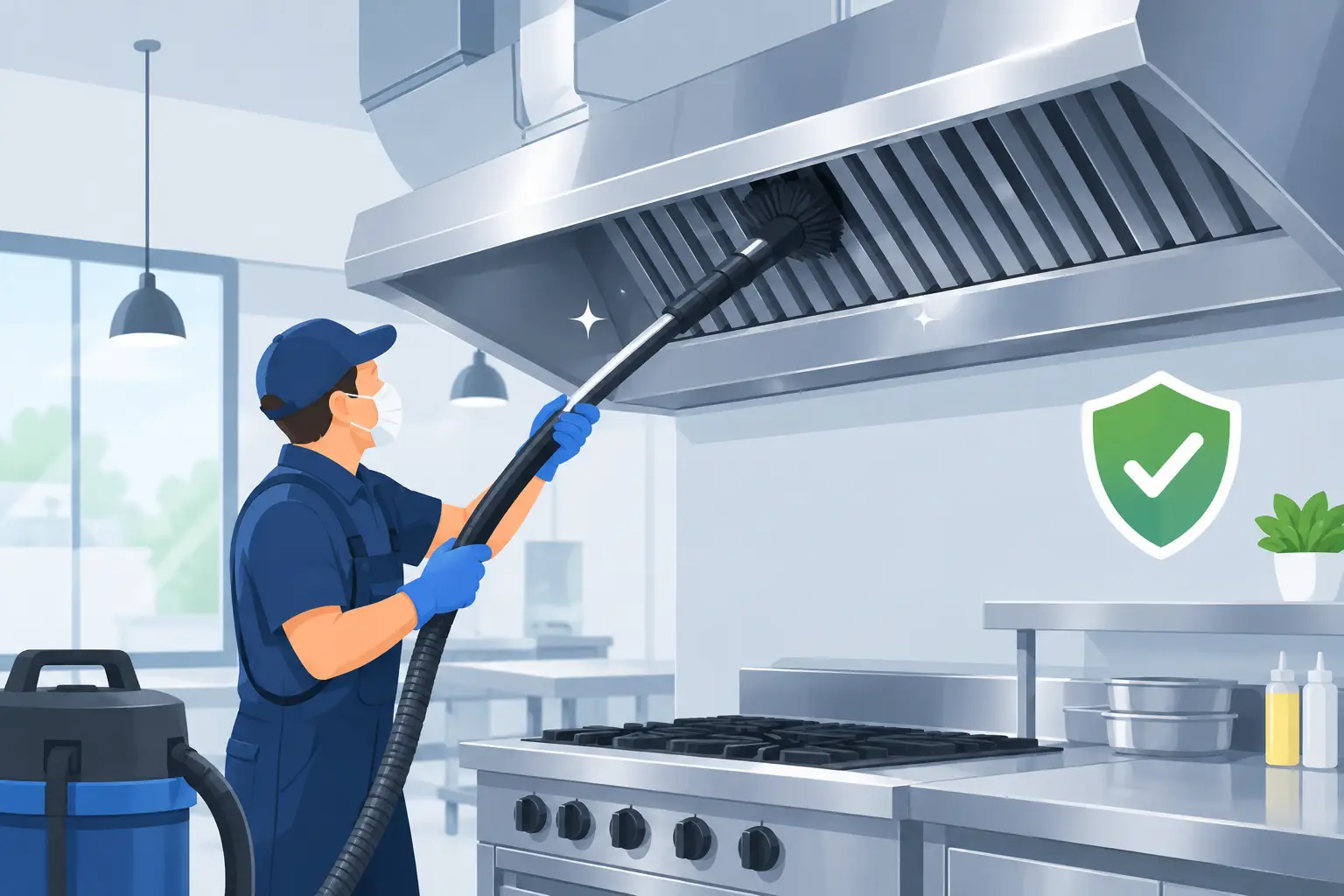
A kitchen duct cleaning service is not simply a cleaning task above the ceiling. In commercial kitchens, grease-laden vapour travels from the cooking line through hoods, filters, plenum chambers, ductwork and exhaust fans. Some grease is captured at the hood filters, but a proportion can settle further along the system. Over time, that build-up can affect airflow, create unpleasant odours and increase the combustible material within the exhaust route.
For restaurant operators, hotel kitchens, food courts, central kitchens and institutional catering facilities, planned exhaust cleaning is part of responsible building maintenance. The right scope depends on how the kitchen operates, what is cooked, how often equipment is used and whether the whole exhaust system can be safely accessed.
What does a kitchen duct cleaning service cover?
A professional kitchen duct cleaning service focuses on the exhaust path that removes heat, smoke, moisture and cooking fumes from the kitchen. It should not be confused with general kitchen cleaning or the washing of visible hood filters alone.
A typical service may include inspection and cleaning of the kitchen canopy hood, grease filters, plenum area, accessible exhaust ductwork, access panels, exhaust fan and associated components. The exact scope should be confirmed before work begins, particularly in older buildings or shared commercial premises where duct routes may extend through service risers, roofs or common areas.
The aim is to remove accumulated grease and debris from accessible surfaces without damaging the ductwork, fan assembly, electrical components or surrounding finishes. Cleaning methods may involve manual degreasing, scraping, controlled chemical application and specialised equipment. The appropriate method depends on the level of build-up, duct material, access conditions and the kitchen’s operating requirements.
Why grease build-up needs attention
Grease is a normal by-product of cooking, especially where frying, grilling, roasting or high-volume wok cooking takes place. The issue is not whether grease will enter the system, but how effectively it is managed over time.
When deposits develop inside exhaust ductwork, the system may become harder to maintain. Restricted or uneven airflow can leave more heat and fumes around the cooking line, affecting staff comfort and the working environment. Grease deposits can also produce persistent odours, particularly when the exhaust system is started after a period of inactivity.
There is also a fire safety consideration. Grease is combustible, and deposits within a kitchen exhaust system can contribute to fire spread if ignition occurs at the cooking equipment. Cleaning does not remove every operational risk in a kitchen, but it reduces accumulated fuel within the exhaust route and supports a broader fire prevention programme.
For facility managers, the practical concern is often visibility. Duct interiors are hidden, and a clean-looking canopy does not prove that the ductwork and fan are clean. Inspection is therefore as important as cleaning. It provides a clearer basis for deciding what work is necessary and where access limitations may remain.
Signs your kitchen exhaust system may need cleaning
A service interval should be based on kitchen use rather than appearance alone. However, several signs can indicate that an inspection is due. These include noticeable grease around hood joints or access panels, reduced capture of smoke and fumes, stronger cooking odours outside normal operating periods, grease dripping from filters, excessive noise or vibration at the fan, and visible deposits around the exhaust discharge point.
These signs do not always mean the ductwork is the only cause. Poor hood performance can also result from damaged filters, incorrect fan operation, blocked make-up air paths, poorly adjusted dampers or changes to the cooking layout. A competent assessment should distinguish between a cleaning requirement and an airflow or equipment issue.
How often should kitchen ducts be cleaned?
There is no single timetable that suits every commercial kitchen. A busy outlet with continuous frying and grilling may require more frequent attention than a small pantry used for light reheating. Central kitchens, hotel banqueting operations and food court tenants can experience very different grease loads despite having similar equipment.
When setting a maintenance plan, consider the type of cooking, daily operating hours, volume of food preparation, hood and duct design, filter condition, previous cleaning records and any building or insurer requirements. A documented inspection schedule is useful because it allows the operator to review the system condition instead of relying on assumptions.
In multi-tenant buildings, responsibility should also be clear. The tenant may maintain the hood and filters while the property manager is responsible for common exhaust risers or roof-mounted equipment. Where ductwork is shared, cleaning needs to be co-ordinated carefully so that one kitchen’s grease does not become another party’s maintenance problem.
What good cleaning work looks like
Effective cleaning starts with preparation. The contractor should identify the duct route, available access points, nearby equipment and surfaces requiring protection. Kitchen operations may need to pause, and the work area should be managed to avoid contamination of food preparation areas.
During the inspection, the technician should check the visible condition of the hood, filters, accessible duct sections and fan. In some cases, additional access panels may be needed for safe future maintenance. This should be discussed with the building owner or manager before alterations are made.
Cleaning should address the system as a route, rather than treating the hood as an isolated item. A spotless canopy offers limited value if substantial grease remains in the plenum, duct bends or fan housing. At the same time, it is not always possible to reach every section of a complex duct system without major access work. This limitation should be documented clearly, not overlooked.
After cleaning, the work area should be left tidy and the system checked before normal use resumes. Service records, photographs where appropriate and notes on access constraints help facilities teams plan the next inspection and demonstrate that maintenance has been carried out.
Cleaning and ventilation performance are connected
Kitchen exhaust cleaning supports ventilation performance, but it does not automatically correct every airflow problem. If a kitchen remains smoky after cleaning, further checks may be needed. The exhaust fan may be underperforming, the system may be unbalanced, replacement air may be inadequate, or the cooking equipment may exceed the original hood design capacity.
This is where a broader HVAC perspective is valuable. Air balancing can help assess whether air is being extracted and replaced appropriately. Fan servicing may be required if belts, bearings, motors or controls are affecting operation. In some premises, odour complaints may also involve discharge location, duct leakage or poor separation between exhaust and outdoor air intake points.
A practical maintenance decision considers these factors together. Cleaning removes deposits. Inspection identifies visible concerns. Airflow assessment helps determine whether the system is moving air as intended. Each service has a different purpose.
Choosing a contractor for commercial kitchens
Kitchen exhaust systems often run through difficult-to-reach areas and operate close to heat, grease and electrical equipment. Select a contractor that understands commercial ventilation systems, can work safely around kitchen operations and provides a defined scope of work.
Before appointing a provider, ask what components will be inspected and cleaned, whether the exhaust fan is included, how inaccessible duct sections will be handled, what protection will be used for the kitchen area and what documentation will be provided afterwards. It is also sensible to confirm the proposed work schedule, especially for restaurants, hotels and food production facilities with limited shutdown windows.
Aircond Clinic approaches kitchen duct maintenance as part of practical indoor air and ventilation care. The objective is to help building operators maintain cleaner exhaust pathways, support safer kitchen conditions and make informed decisions when cleaning alone is not the full answer.
A well-maintained kitchen exhaust system rarely attracts attention, which is exactly how it should be. Arrange an inspection before grease, odours or poor extraction begin to disrupt the people and operations that depend on the kitchen every day.
Leave a Reply