
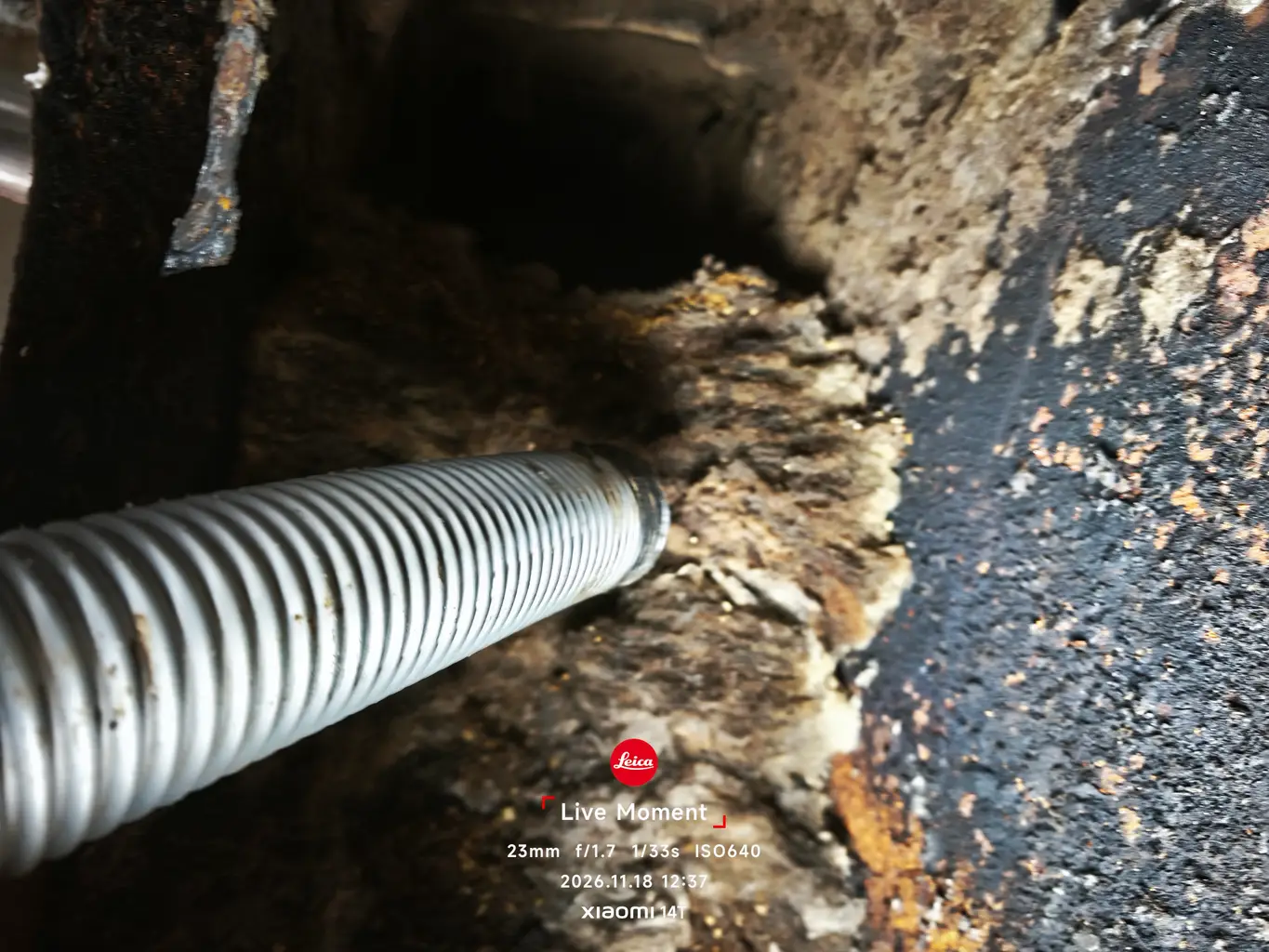
A coffee roaster can be producing excellent beans while its exhaust system quietly collects chaff, fine dust, oils and baked-on residue. Coffee roaster duct cleaning is not simply a housekeeping task. It is a planned maintenance activity that supports safer operation, more reliable airflow and a cleaner working environment around the roasting line.
For roasteries, cafés with on-site roasting and larger production facilities, the right approach depends on the equipment layout, roasting volume, fuel source and condition of the ductwork. A visual inspection is the sensible place to start. It shows what is actually present in the system and helps the facility team prioritise the work.
Why roaster exhaust ducts need attention
Roasting releases smoke, hot gases, volatile organic compounds and fine particulate matter. The exhaust system carries these by-products away from the roaster, usually through ductwork, a chaff collector or cyclone, an exhaust fan and, in some installations, emissions-control equipment before discharge.
Chaff is a particular concern. It is light, dry and combustible, and can accumulate in collection points, bends and areas where airflow is weak. Coffee oils and residue may also adhere to internal duct surfaces over time, especially where the exhaust stream cools. This build-up can restrict the effective area of the duct and make inspection or maintenance more difficult.
The consequences vary. In one facility, residue may mainly affect housekeeping and odour. In another, it may contribute to reduced extraction, visible smoke near the roaster, unplanned fan maintenance or increased fire risk. It is not responsible to assume that every dirty duct has the same level of risk. The condition, location and quantity of deposits must be assessed in context.
When coffee roaster duct cleaning is due
A fixed cleaning interval can be useful for maintenance planning, but it should not replace inspection. A high-volume production roastery will generally require more frequent attention than a small operation roasting occasionally. Darker roasts, duct geometry, fan performance and the effectiveness of the chaff collection system can also affect the rate of build-up.
Facility managers should arrange an inspection when they notice any of the following:
- Chaff or dust escaping from joints, access doors or collection equipment.
- Smoke lingering in the roasting area longer than usual.
- A noticeable drop in exhaust performance or changes in fan noise.
- Visible deposits around accessible duct sections, elbows or the discharge point.
- A change in roasting volume, equipment configuration or operating hours.
- An incident, overheating concern or maintenance finding that may have affected the exhaust path.
Cleaning should also be considered before handing over a new site, after renovation works that may have introduced construction dust, or when an insurer, equipment manufacturer or relevant authority requires maintenance records. The roaster manufacturer’s instructions remain an important reference, particularly for cleaning access, safe isolation and component-specific limits.
What a proper inspection should cover
A useful inspection goes beyond looking at the duct opening. The full route should be considered, from the roaster connection to the point of discharge. This may include the chaff collector, cyclone, expansion chamber, duct branches, fan housing, access panels and stack.
The inspection should identify where deposits are most likely to gather. Elbows, horizontal sections, reduced duct sizes, poorly sealed joints and areas downstream of cooling zones often deserve closer attention. The fan should also be assessed for visible residue or imbalance concerns, although any repair or adjustment should be carried out according to the equipment manufacturer’s guidance.
For enclosed or difficult-to-access ductwork, camera inspection can provide evidence of internal conditions without unnecessary dismantling. Robotic duct cleaning equipment may be suitable for certain duct sizes and configurations, allowing technicians to inspect and clean internal surfaces while documenting the work. However, not every coffee roaster exhaust system is suited to a standard duct-cleaning method. High-temperature components, specialised emissions-control equipment and fragile sections may need a tailored process.
Good documentation matters. Before-and-after images, inspection findings, areas cleaned and limitations encountered give building operators a clearer basis for future maintenance decisions. They also help distinguish confirmed deposits from assumptions based only on external appearance.
Cleaning methods must match the system
The aim is to remove accumulated material without damaging the ductwork, disturbing critical equipment settings or spreading dust through the premises. This normally begins with shutting down the roasting equipment, allowing hot components to cool and isolating the relevant system before work begins. Site safety procedures, including lockout arrangements where applicable, should be followed.
Accessible chaff collectors and removable components may be cleaned manually. Internal duct surfaces may require brushing, controlled vacuum collection or robotic cleaning tools, depending on their size, material, condition and access. Negative-air collection can help contain loosened debris, but the method must be selected carefully for the type of residue and the location of the work.
Where heavy, hardened deposits are found, aggressive cleaning is not automatically the right answer. Older ductwork, degraded seals and poorly supported sections may need repair or replacement planning before deep cleaning proceeds. A practical contractor will explain the condition found, the available options and any areas that cannot be safely cleaned without further access work.
Coffee roaster exhaust cleaning is sometimes confused with kitchen duct cleaning. Both involve extract systems and combustible residue, but the contaminants, equipment temperatures and operational requirements can differ. Grease-heavy kitchen extract systems need a different assessment from a coffee roasting line dominated by chaff, fine particulate matter and roasting by-products. The cleaning plan should reflect the actual process, not a generic label.
Restore airflow, then verify it
Removing residue does not guarantee that airflow is correct. A system may remain underperforming because of fan faults, incorrect pulley or speed settings, damaged dampers, poor duct design, blocked filters, inadequate make-up air or changes made during previous alterations.
After cleaning, facility teams should observe whether the roaster exhaust is operating as expected during a controlled production run. Signs such as smoke spillage, inconsistent draw or unusual odours should be investigated rather than treated as normal. Where airflow performance is a concern, air balancing or targeted measurements can help identify whether the issue is in the ductwork, fan system or wider ventilation arrangement.
This is particularly relevant where roasting takes place within a retail café, shared commercial building or production floor with other occupants. Exhaust performance affects not only the roasting process but also comfort, odour control and the indoor environment around the work area.
Building a realistic maintenance plan
The most effective plan is based on operating conditions, not guesswork. Start with a documented baseline inspection after cleaning or at the beginning of a new maintenance programme. Record roasting hours, bean throughput, roast profiles, cleaning dates and any recurring findings at the collector, fan or duct bends.
The next inspection date can then be set according to the observed rate of accumulation. If the system remains clean and airflow is stable, the interval may be appropriate. If deposits return quickly, the answer may be more frequent cleaning, but it may also involve improving collection efficiency, adding suitable access points or reviewing duct layout and fan performance.
Daily and weekly checks by the roasting team are equally valuable. Emptying chaff collectors as required, checking accessible joints and reporting changes early can prevent a small issue from becoming a disruption to production. These routine checks do not replace specialist cleaning, but they give the maintenance team better information.
Choose evidence over assumptions
A contractor should be able to explain what was found, where it was found and why the recommended scope is appropriate. Ask whether the entire exhaust route will be inspected, how debris will be contained, whether the fan and collection points are included, and what evidence will be provided after the work.
For Malaysian commercial and industrial premises, maintenance planning should also consider site-specific fire safety requirements, building management rules and the recommendations of the roaster manufacturer. There is no single cleaning frequency that fits every operation.
A clean coffee roaster exhaust system supports more than a tidy plant room. It gives operators a clearer view of their ventilation condition and a practical foundation for safer, more dependable roasting. If your facility is seeing chaff build-up, smoke concerns or inconsistent extraction, arrange a professional inspection and use the findings to plan the next sensible step.
Leave a Reply